What a radiator grille shape tells you that paint color can't
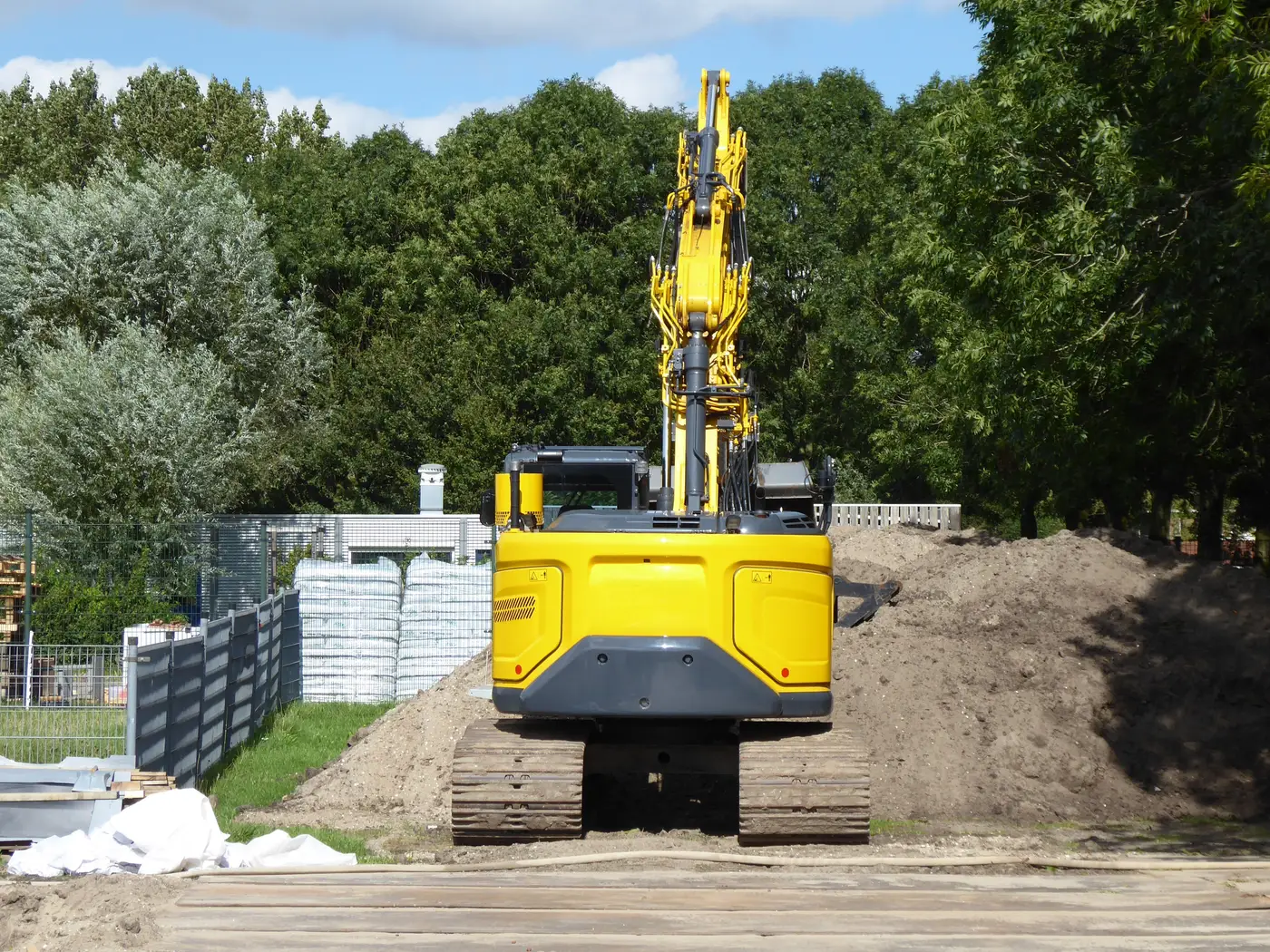
If you've ever tried to call a manufacturer off a site photo using nothing but the paint, you've probably already been burned once. A yellow machine isn't automatically a Cat. A rental unit sprayed in a dealer's house color isn't automatically that dealer's brand. Color is the first thing your eye grabs, and it's also the first thing that lies to you.
Grille shape doesn't lie the same way. It's tooled into the sheet metal, not sprayed onto it, and that difference is the whole reason it holds up as an attribution signal when color doesn't.
Why paint color breaks down as a tell
Paint is a surface. It fades, it gets recoated, it gets matched to a rental company's livery instead of the OEM's, and on an older machine it's often chalked out to something close to gray no matter what it started as. Dealers repaint trade-ins. Fleet owners standardize colors across mixed brands so the yard looks uniform from the office window. None of that has anything to do with who built the machine.
There's also the overlap problem. Yellow shows up across multiple manufacturers' excavator and loader lines. Orange isn't owned by one builder either. If your attribution logic leans on a color bucket, you're going to misfile a meaningful share of machines the moment paint doesn't match the brand you expect, and on a mixed fleet site that's not a rare edge case, it's a regular Tuesday.
What the grille actually gives you
The grille, by contrast, is part of the machine's structure. Slat count, slat angle, whether the opening is a vertical-bar grid, a honeycomb mesh, or a perforated panel, the shape of the surround, the way the grille wraps into the hood line. These are tooling decisions a manufacturer makes for a model generation and tends to keep fairly consistent across a production run. A repaint doesn't touch any of it. A dusty, sun-faded machine that's lost most of its color contrast still has a grille with the same slat pattern it rolled off the line with.
That's the practical case for reading grille geometry over color on a very-high-resolution image: it survives the conditions that actually show up on real sites. Dust, fade, mismatched touch-up paint, rental repaints, even a replaced hood panel that doesn't quite match the body color, none of it erases the slat pattern or the grille outline.
It's also worth being honest about the limits. Grille shape alone isn't a guaranteed single-OEM fingerprint. Some manufacturers share design language across sister brands or model generations, and a grainy or oblique-angle image can flatten a slat pattern enough that it's hard to call with confidence. That's why grille shape works best read alongside boom geometry and counterweight silhouette rather than on its own. Three structural tells agreeing on a manufacturer is a much stronger read than any single one of them.
Reading shape alongside boom and counterweight
Boom geometry adds a second structural signal: how a manufacturer configures the joints and profile on a given class of excavator or loader tends to vary by brand and model line, and like the grille, that geometry doesn't move when the machine gets repainted. Counterweight silhouette is the third leg: the rear-end shape and contour that a brand carries across a product family. None of these three require legible paint, a visible decal, or a lucky angle on a badge. They're read from the machine's outline and surface detail in the image itself.
If you're building a fleet-share picture of a site, that combination is the difference between a count of "machines" and an actual read of whose iron is on the ground. Machine Brand Recognition was built around exactly that stack: color, boom geometry and grille slat pattern read together from very-high-resolution imagery to attribute a detected machine to a manufacturer, rather than guessing off the paint job alone.
Attribution is a harder read than a simple machine count, which is why this is running as a pilot rather than a packaged report you can just buy off the page. If grille-level attribution is the gap in your current fleet-share numbers, it's worth getting on the pilot list and seeing what the read looks like on your own site imagery.