What a counterweight ballast kit does to an excavator's silhouette
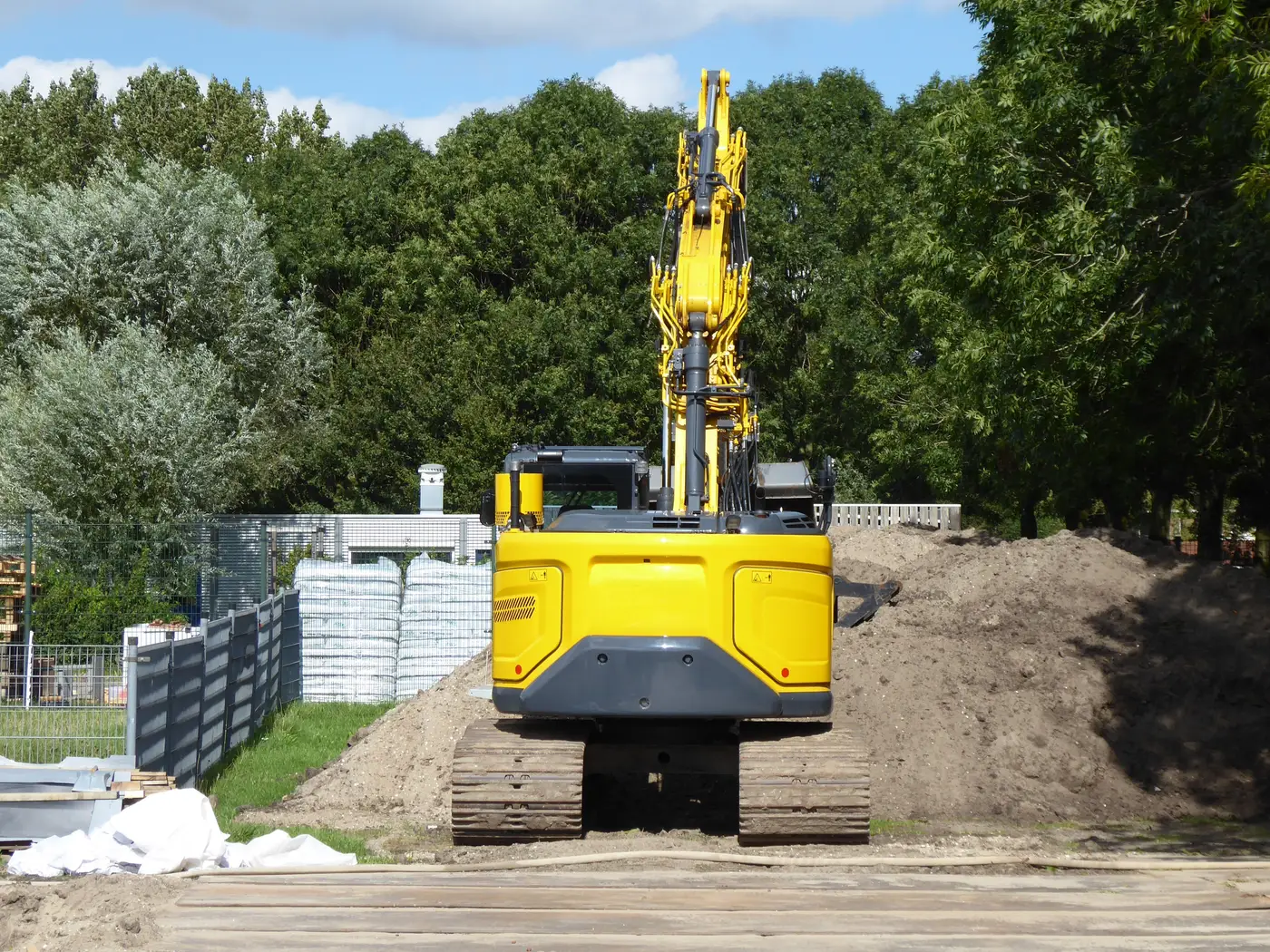
If you've ever pulled up an aerial frame and found a 40-tonne-class excavator whose rear end looks nothing like the catalog photo, you've probably run into a ballast kit. It's a bolt-on counterweight add-on, and on imagery-based attribution work it's one of the more annoying variables in the field.
What a ballast kit actually is
A counterweight ballast kit is a set of steel plates or a pre-cast mass block that bolts to the rear of the excavator's superstructure, behind the standard factory counterweight. Most large hydraulic excavators ship with a fixed counterweight sized for a typical digging configuration. The moment a contractor swaps to a long-reach boom, a heavier demolition shear, or wants lift-crane capacity for pick-and-carry work, that factory counterweight often isn't enough mass to keep the machine stable. The ballast kit adds the extra tonnage at the back end so the machine doesn't tip forward under load.
You see these most on 30 to 90-tonne class excavators doing lifting duty, mass excavation with oversized buckets, or long-reach demolition where the boom extends well past the standard reach. Mining contractors and demolition outfits are the two groups that reach for a ballast kit most often, and rental yards tend to stock a few kits because the same base machine gets reconfigured job to job.
Why this matters for a silhouette read
OEMs design their counterweight housings as a visible brand signature almost as much as an engineering spec. Komatsu's rounded rear deck, Hitachi's stepped profile, a Volvo boxy edge: these outlines are part of how an analyst tells machines apart from above without ever seeing a logo. Paint color gets masked by dust, decals get stripped off for resale, but the counterweight casting line is usually still there.
A ballast kit sits right on top of that signature. Depending on the kit's shape, it can square off a rounded factory counterweight, extend the depth of the rear overhang, or add a stepped shelf where the OEM's line was smooth. From directly overhead, at the resolution most aerial and satellite capture gives you, the result is a rear-end outline that no longer matches the base model's published silhouette. In worse cases the kit's own shape happens to resemble a different manufacturer's stock counterweight profile, and a silhouette-only read misattributes the machine entirely.
Boom geometry survives this better than the counterweight does. Reach segments, dipper arm angles, and the arc of the boom cylinder mounts don't change when someone bolts on ballast, so a read that cross-checks boom geometry against the counterweight outline catches a lot of what a silhouette-only pass would miss. Color still helps too, when the imagery resolution and lighting cooperate, since a ballast kit rarely gets repainted to match.
What this means for a fleet count
If you're trying to turn a machine count into a branded fleet-share number for a region or a competitor's job site, ballast kits are exactly the kind of detail that erodes confidence in a silhouette-only method. A handful of reconfigured large excavators on a mining site can shift an attribution call more than you'd expect, because those are precisely the machines most likely to be carrying aftermarket counterweight.
It's also worth knowing which asset classes carry this risk. Mini excavators and most mid-size digging machines almost never run ballast kits, so a fleet count built from those size classes is on firmer ground. The risk concentrates in large hydraulic excavators doing lift-assist or long-reach work, which is also usually the equipment mix worth attributing most carefully in the first place.
This is the gap our pilot work on attributing detected machines to a manufacturer is built around: reading color, boom geometry, and counterweight silhouette together rather than any one of those cues alone. If you're running fleet-share analysis on high-resolution imagery and want to see where that read holds up, we're taking it to a pilot list now.