Volvo CE vs SDLG: telling the sister brands apart in aerial imagery
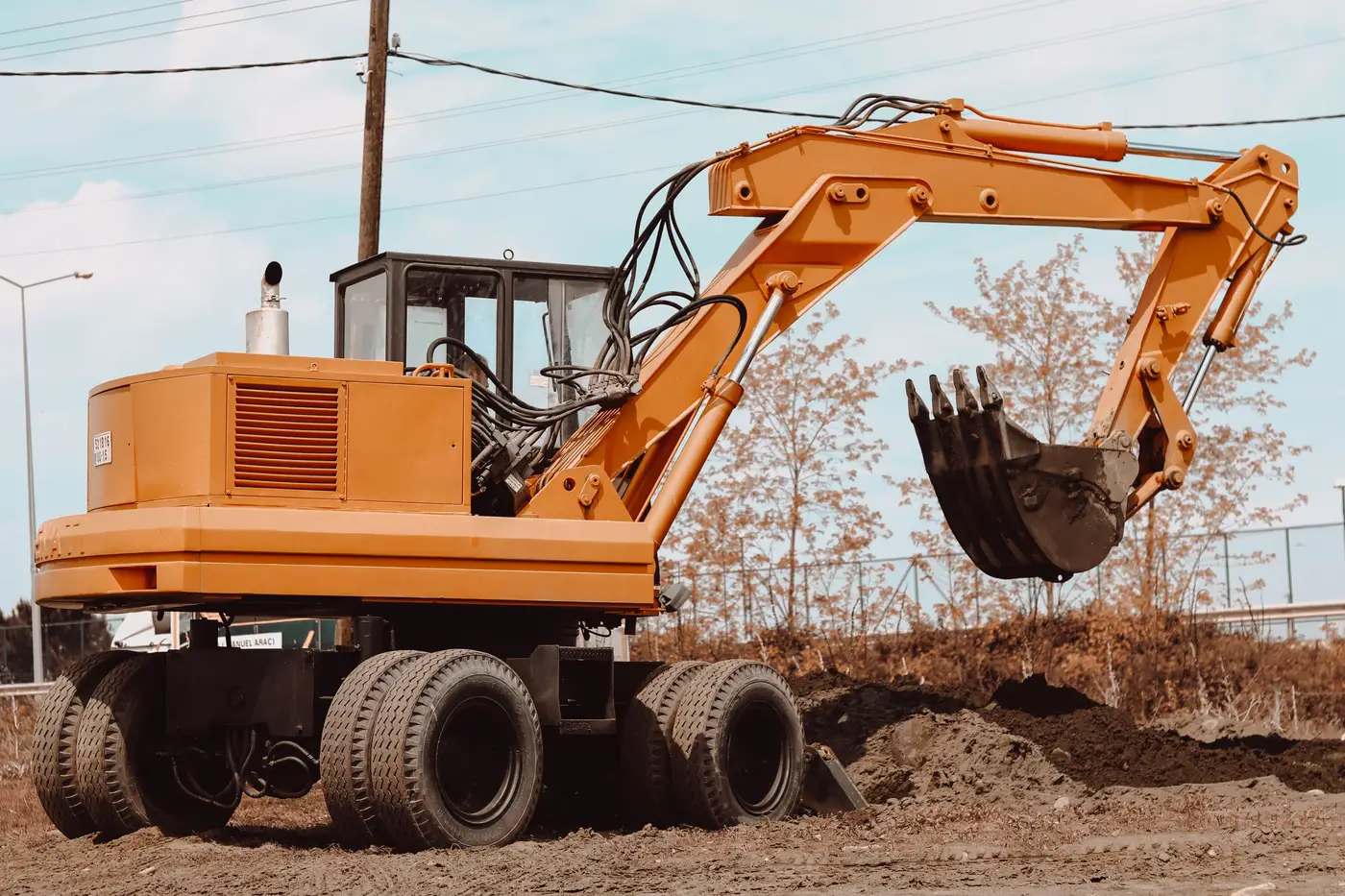
If you've ever pulled a fleet count off a construction site or a rental yard and tried to split it by brand, you've probably hit this exact wall: a cluster of yellow excavators that could be Volvo, could be SDLG, and the imagery alone won't say which.
This is a corporate-structure problem that happens to show up as a visual one.
A family tree problem, not a paint problem
Volvo Construction Equipment has owned a controlling stake in SDLG (Shandong Lingong) since 2007. SDLG machines, built mostly for China and other price-sensitive markets, share engineering, componentry, and in some model lines, a yellow paint scheme close enough to Volvo's own that a quick glance won't settle it. SDLG was designed from the start as a deliberate second brand under the same parent, running on overlapping platforms and sold into a different price tier.
For anyone doing fleet-share work, that's the whole problem in one sentence: you're not separating two competitors, you're separating two brands that were built to share DNA. A straightforward "count the yellow excavators and call them Volvo" approach will overstate Volvo's actual on-site presence anywhere SDLG sells, and in markets where both brands run side by side, that overstatement isn't a rounding error.
What the imagery gives you
Three things hold up reasonably well in very-high-resolution imagery, even without a ground crew to confirm:
Color still matters. It narrows the field from "every excavator on site" to "the excavators worth a closer look," rather than settling which brand you're looking at. Volvo's yellow runs slightly deeper and more saturated than SDLG's in most model years, and under consistent lighting conditions that difference is visible at the pixel level. Paint fades, re-sprays happen, and compression artifacts flatten subtle hue differences fast, so color alone won't close the case.
Boom geometry is the better tell. SDLG's excavator line, particularly the mid-size models that make up most of its volume, carries boom and arm proportions that trace back to earlier-generation platforms. Volvo's current lineup has moved its boom design further along, with a more pronounced pivot geometry visible from directly overhead. On a clean nadir shot of a parked machine, that difference in silhouette is often more reliable than the paint.
Counterweight shape rounds it out. The rear counterweight profile, how far it extends past the tracks, how squared or rounded the back edge is, varies enough between the two brands' current model years to act as a third confirming signal rather than a standalone one.
None of these three reads is conclusive by itself. Together, on a clear overhead shot of a stationary machine, they get you a defensible call more often than not.
Where it still comes down to judgment
Older machines blur all three signals. A ten-year-old SDLG unit and an older Volvo model can converge on color and boom profile in ways that current-generation machines don't. Oblique angles, shadow, and partial occlusion from nearby equipment all chip away at how much of the silhouette you get to work with. And this is before accounting for repaints, decal removal, or secondhand machines that have changed hands, and sometimes livery, more than once.
That's the honest state of this read today: it's harder than counting excavators on a site, and meaningfully harder than telling an excavator from a wheel loader. Sister-brand pairs under one parent company, Volvo and SDLG being the clearest example in this category, are exactly the case where brand attribution from imagery needs the most care, not the least.
We built a dedicated attribution workflow for this reason: reading color, boom geometry, and counterweight silhouette together to turn a raw machine count into a branded fleet-share read, starting with the pairs where it matters most to get right.
If parent-company overlap like Volvo and SDLG is a problem you're already running into, we're taking a short pilot list for exactly this kind of read.