Field notes: the dust storm that turned every excavator the same shade of orange
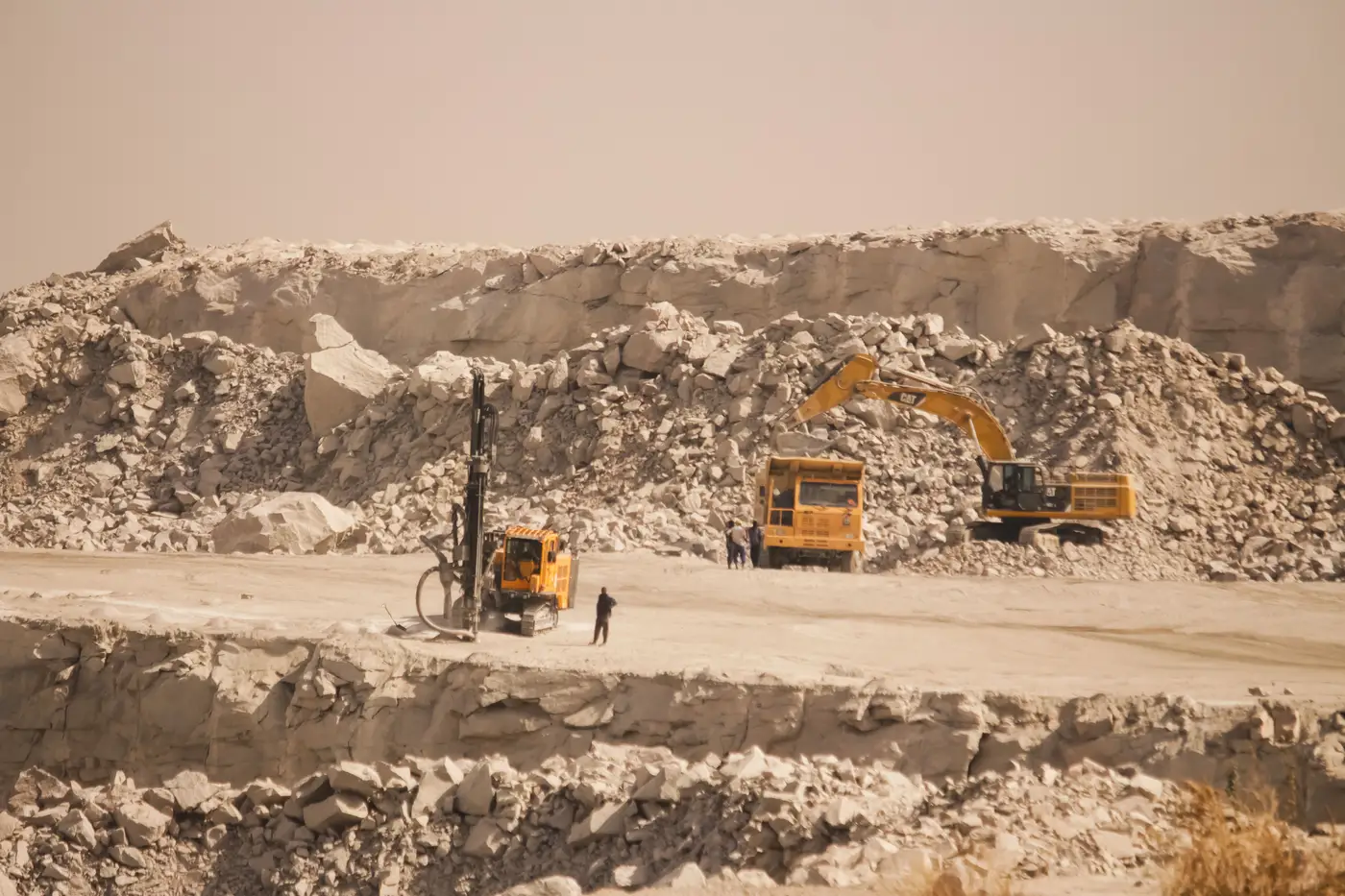
A pad site in West Texas, mid-August, wind running 35 to 40 out of the southwest for the better part of a day. By the time the imagery came in the next morning, every excavator on that site read the same washed-out ochre. CAT yellow, Hitachi orange, Komatsu's own yellow, all of it sanded down to one color by a few inches of blown caliche dust sitting on top of the paint.
If you attribute fleet by color, that's a bad morning. If you've spent any time doing this by hand, it's not even surprising.
Paint is a proxy, and proxies fail on schedule
Color is the fastest tell in the image, which is exactly why it gets leaned on past the point it should. A tile reviewer glances at a machine, sees safety yellow, writes CAT, moves to the next one. Works fine on a clean day. Falls apart the moment the machine has been sitting in caliche dust, or working a wet clay pad where everything's the color of the clay, or it's six years old and the paint's chalked out from UV the way yellow does faster than most colors on the chart.
Weathered paint color attribution is its own small problem inside the bigger one. A faded CAT yellow and a faded Case construction yellow start converging on the same muddy tan once the gloss is gone and the dust has had a few weeks to settle into the texture. What you're comparing, once sun and grit have had their say, is what's left of two different yellows after different amounts of weather on each paint job, not the original hex values. Pull color straight off the pixel without checking anything else and you'll walk two machines right out of their own brand and into each other's.
What holds up when the paint doesn't
The useful habit, once you've gotten burned by a dust storm or two, is to stop treating color as the answer and start treating it as one vote among several. Boom geometry doesn't sand off in a wind event. The angle of a monoboom versus a two-piece boom, the reach-to-height ratio, the way the stick pins sit relative to the house, all of that reads the same whether the machine is factory-clean or coated in a week of jobsite dust. Counterweight silhouette is the other one that survives weather that paint doesn't: the rear overhang profile, how far the counterweight sits proud of the tracks, whether the top of it is flat or stepped. Those are casting decisions a manufacturer made years before the machine ever got dirty, and dust doesn't change a casting.
So the sequence that actually holds up on a bad-paint day is geometry first, color second, not the other way around. Shape narrows the field to a couple of plausible manufacturers, and color, even degraded color, is usually enough to break the tie between two candidates once you're not asking it to do the whole job alone. Ask color to work solo on a dust day and it'll hand you the same wrong answer for every machine on the pad, because they're all wearing the same coat of caliche.
It's a small thing to flag in field notes, but it's the kind of small thing that quietly wrecks a fleet-share read if nobody's watching for it. A storm doesn't change what's parked on a site. It just changes how confidently you can tell what's parked there from a picture, which is a different problem than it looks like at first glance.
This is more or less the read a tile reviewer does by eye, and it's the same read Machine Brand Recognition is being built to run on counterweight and boom geometry rather than color alone, for exactly the days color can't be trusted. If attributing fleet mix by eye through weather like this sounds familiar, the pilot list is the place to say so.