CAT yellow vs Komatsu yellow in satellite imagery: can you actually tell them apart?
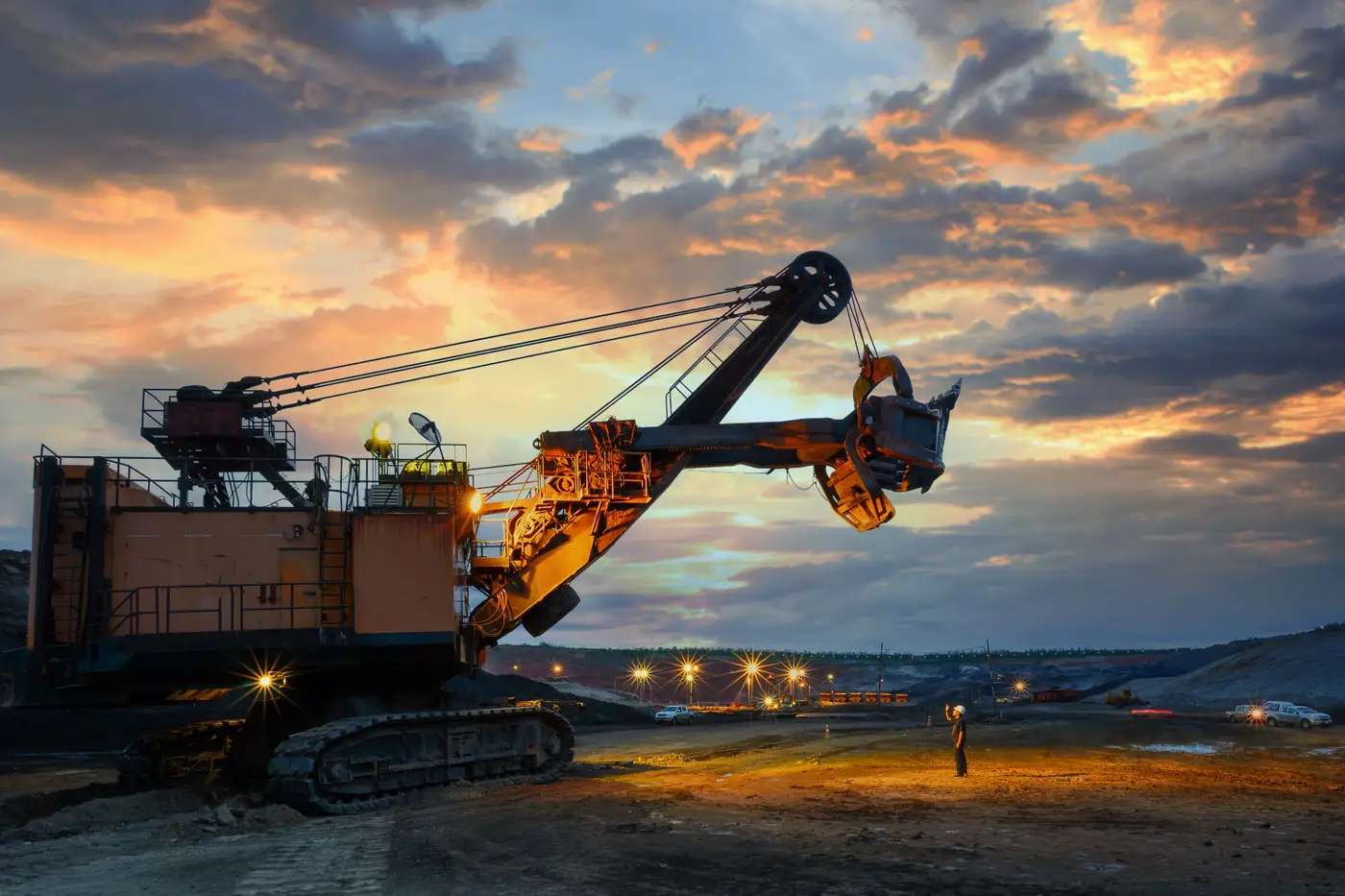
If you've ever pulled a chip of high-resolution imagery off a job site and tried to sort the yellow machines into "Cat" and "everything else," you've already run into the problem. Caterpillar yellow and Komatsu yellow are different paint formulations on the ground. From 30-50cm resolution looking straight down through a few kilometers of atmosphere, they often aren't.
Two yellows, one pixel
Cat's factory yellow runs a touch more saturated and leans slightly orange under direct sun. Komatsu's yellow trends a bit cooler and more muted, closer to a construction-safety yellow than a branded one. On a paint chip next to each other, most people in the trade can call it on sight. In a satellite image, that's a different exercise.
A VHR sensor records reflected light: filtered by atmospheric haze, bent by the sun's angle at capture time, then compressed into whatever bit depth the provider ships. That's the signal standing in for paint color, and it's an imperfect stand-in on every single capture. A machine that looks warm-yellow at 10am local time can shift a few RGB values by 2pm just from shadow angle and haze thickness, with zero change in the paint underneath. Add in sensor-to-sensor variation between providers and even the same machine photographed twice can read as two different shades.
The result: CAT yellow and Komatsu yellow sit close enough on the color axis that treating color as a standalone signal is a mistake. You'll get it right on a clean, cloud-free, midday capture with good nadir angle. You'll get it wrong on anything else, and most of your archive is "anything else."
It's not just a two-OEM problem
This gets harder once you remember how many other manufacturers also paint equipment some shade of yellow. Komatsu, Hyundai, Doosan, JCB on some lines, and a handful of regional OEMs all sit in a yellow-to-gold band that overlaps with Cat's on a standard color chart, let alone a satellite sensor's. Treat it as a binary Cat-vs-not-Cat question and you'll misattribute every Hyundai excavator on the pad straight into the Cat column.
Construction equipment color codes by OEM exist on paper (paint suppliers can tell you the exact formulation each manufacturer specs), but that reference data doesn't travel with the pixel. The pixel just has a color value, and that value has already been through atmosphere, sun angle, and compression before you ever open the file.
What actually separates the yellows
Color still carries information, it's just not sufficient on its own. The read that holds up combines color with the things atmosphere and sun angle don't distort as much: boom geometry, counterweight silhouette, and the general proportions of the machine. A Cat 320 and a Komatsu PC210 aren't shaped the same, even when the paint reads nearly identical. The counterweight profile, the angle of the boom at rest, and the overall footprint are mechanical facts that don't shift with haze the way an RGB value does.
That's the combination this site is built around, which is why we read color alongside boom geometry and counterweight shape rather than leaning on paint alone. A count of "forty yellow machines" doesn't tell a competitive intelligence team much. A count that splits those forty by manufacturer does, but only if the method behind the split holds up when the lighting isn't perfect.
Where this leaves you
Color alone won't hold up for manual attribution off today's imagery, especially on anything shot under haze or at a low sun angle. Cross-check against shape wherever you can, and treat any attribution made on color alone as provisional until you've confirmed it against the machine's silhouette.
If you'd rather not build that cross-check by hand for every site in your pipeline, Machine Brand Recognition is taking early-access requests for exactly this problem: turning a raw machine count into a branded fleet-share read.