Cab glazing shape as a manufacturer tell in satellite imagery
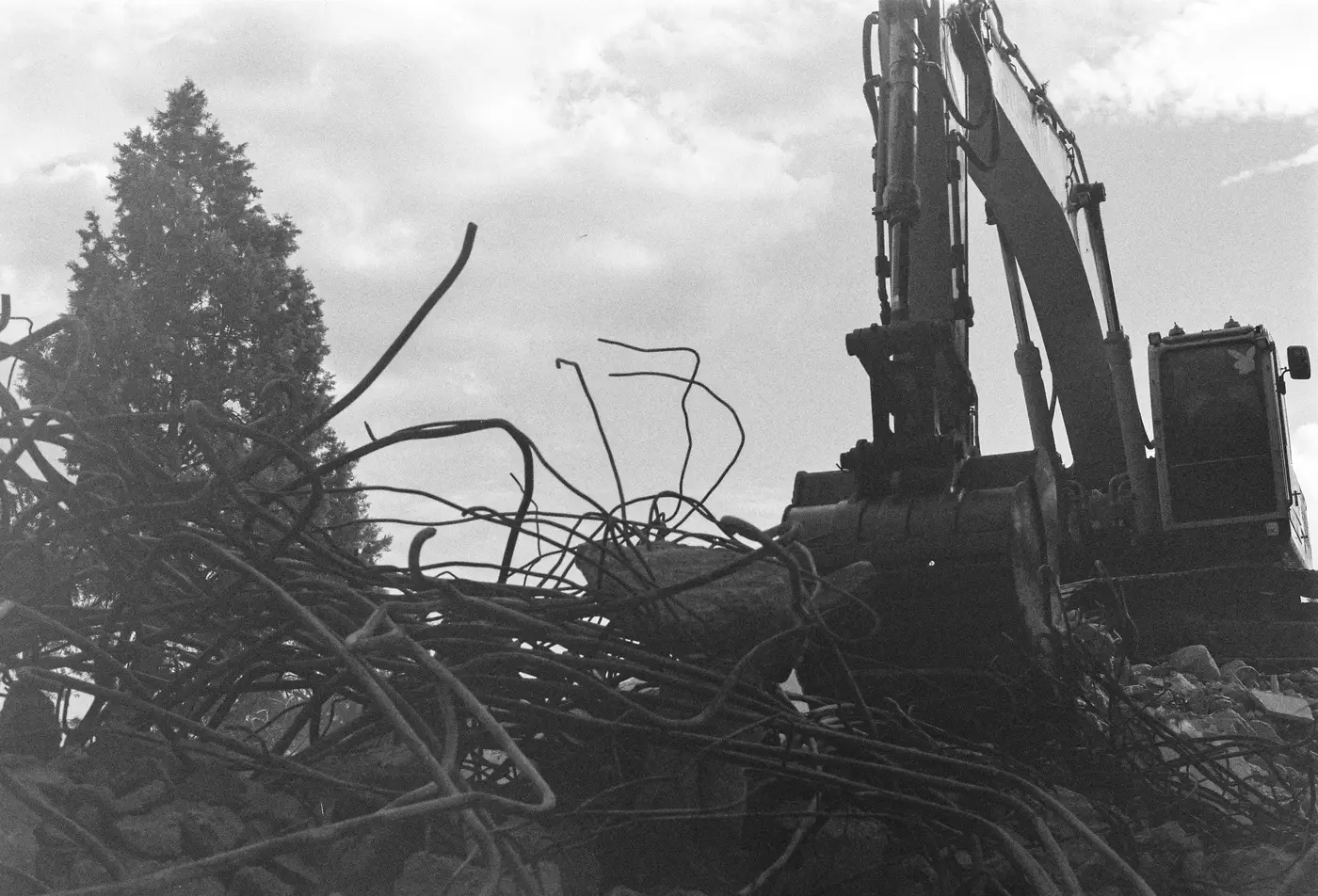
Counting excavators on a competitor's site is the easy part of this job. Telling a site team which of those counted machines came off a Komatsu line versus a Hitachi or Cat line from a vertical image is the part that actually takes a trade eye, and cab glazing shape is one of the quieter cues that eye learns to pick up.
At nadir or near-nadir angles, a cab reads as a rectangle of glass and frame sitting ahead of the counterweight. That's not much to work with. But OEMs don't all cut that rectangle the same way, and the differences survive compression and resampling better than you'd expect.
What's actually visible from overhead
A few cab features tend to hold up at sub-meter resolution:
- Glazing wrap. Some cab designs carry glass further around the front corner pillar than others, so the glazed area reads as a slightly wider polygon relative to the roof outline. Others keep a hard vertical pillar line that shows as a sharp break in the glass-to-frame ratio.
- Panel seams. Where a cab uses a single curved front pane versus a split two-panel front, you can sometimes catch a faint seam line in high-sun conditions, especially on newer glass that hasn't picked up dust yet.
- Roof overhang shadow. The cab roof often extends slightly past the glazing line to shed water, and that lip throws a thin shadow onto the glass in low-sun passes. The width of that shadow band varies by model family more than it varies within a model family, which is what makes it worth logging.
- Skylight glass. Some cabs include an overhead glass panel for crane and high-reach visibility. When present, it shows up as a brighter or darker rectangle inset into the roof, depending on sun angle and whether it's tinted.
None of these are large features. On a 30 cm pixel, a cab might be four or five pixels across. You're reading a ratio and a shadow band, not a labeled part.
Why it's a tell and not a fingerprint
The honest limitation here matters more than the pattern itself. Glazing shape shifts across model years within the same OEM, it shifts across weight classes within the same product line, and it's genuinely hard to separate from compression artifacts on anything below very-high-resolution imagery. A glazing read on its own gets you a hypothesis, not an attribution.
That's why this cue works best stacked against the other silhouette signals rather than used alone: counterweight shape at the rear, boom and stick geometry, and paint color where the imagery has enough spectral separation to resolve it reliably. Glazing shape earns its keep when it either confirms what the counterweight already suggested, or when it's the only legible feature because the rest of the machine is partially occluded by a stockpile or another unit parked close in. On a crowded yard shot, that second case comes up more often than you'd think.
It's also worth separating from boom-mounted camera housings and antenna domes, which some competitive-intel checklists lump in with "cab features." Those sit outside the glazing line and move independently of cab design generation, so they're a different signal with their own failure modes.
Building this into a fleet read
If you're doing this by hand across a handful of competitor sites, a trained analyst cross-referencing glazing shape against counterweight silhouette and boom geometry is workable. It stops being workable once you're running it across a portfolio of sites on a standing cadence, because the read depends on consistent sun angle, consistent resolution, and someone holding all three cues in their head at once for every detected unit.
That's the gap Machine Brand Recognition is building a pilot around: taking a raw machine count on very-high-resolution imagery and attributing each unit to a manufacturer using exactly this kind of combined silhouette read, color, boom geometry, counterweight shape, and the smaller cues like glazing wrap. It's early access rather than a finished report, because attribution is a harder problem than counting and we're not going to pretend otherwise.
If fleet-share-by-brand is a question you're already asking about a competitor's site, it's worth getting on the pilot list before you build the glazing checklist yourself.